Open Days – A Must for the Academic as Well

September and October are usually the season for university open days, and this year is no exception. But over the years, the expectations of prospective students have changed. Back in the olden days, the key issues for prospective students were student accommodation, sporting facilities and amenities, and the suitability of the university’s location as a possible haven away from the prying eyes of overbearing parents.  Don’t get me wrong. These issues are still important for today’s prospective student.  However, unlike the cohorts of yester year, today’s open day visitors are now placing equal, if not more,  emphasis on universities’  learning and teaching environments, including such outcomes as graduate career chances and employability.

 Emerging Changes in Open Days

Open days often fall on Saturdays. In the olden days, open day duties often fell on those unfortunate enough to have responsibilities for undergraduate teaching, and for newly recruited academics. The situation now appears to have changed. Up and down the country, it seems, engineering departments are now deploying their “best” academics to host prospective students and their parents on open days. And for good reason too. Student fee income now determines the success and continued operation of a department, its re-organisation – euphemism for staff retrenchment and merger with other departments – or at worst, its closure.

For the diligent academic, open days offer a unique opportunity for assessing the expectations of prospective students and their parents.  As I found out this year, prospective engineering students have become extremely savvy in their academic requirements. Whilst I agree with the generality of the literature on student transitions that some of the expectations of prospective students tend to be unrealistic, the casual conversations that I had with parents and prospective students this year paint a somewhat different picture.  It is now clear to me that both prospective students and their parents are now quite well-researched about the programmes that they intend to follow.

Demand for Industry Links

Moreover, the prospective students that I met have very clear expectations on the nature of teaching they want. As expected amongst engineering students, their prime concerns are employability related issues. As expected, students wanted to know more about the possibility for industrial placements, as well as the availability of any career-support programmes in the university. However, most interestingly, students were extremely interested in the extent to which industry collaborates with us in teaching and assessment. For example, they also wanted to know to what extent industry contributed to project-based learning activities, including the extent to which students get to work on authentic industry sourced projects.

Demand for Research Involvement

Whilst students of yester year have expressed satisfaction with simply being in a department associated with some notable research expertise, this year I found out that prospective student expectations are now much higher. Quite a number of prospective students wished to know the kind of research they might be involved with in the first year, and whether they would get to work with some noted researchers on actual university research programmes. They even mentioned some noteworthy names within engineering, and even mentioned some of our current research projects.  Of course, in previous years we would simply have laughed this away. But this year it is definitely different. Prospective students fully expect to get their hands into real research, and we have no option but to find a way of facilitating this. It is no wonder that universities are coming up with strategies for research-based learning including, for example, the UCL Connected Curriculum.

Demand for Personalisation

It also appears personalisation has become a key issue for prospective students. For instance a number of prospective students wished to know whether there were opportunities to specialise in certain subject areas, or whether there were opportunities to complement their degree programmes with courses from other faculties, so as the create an appropriate match between their studies and prospective careers. Moreover, prospective students were also looking for opportunities to spend time in institutions in other countries.

What it means for the Academic

Of course, most universities have launched various undergraduate reform programmes.  This includes the introduction of various forms of project-based learning, and in some cases, wholesale re-organisation of undergraduate programmes to introduce more collaborative, research-based and industry-linked programmes like the Integrated Engineering Programme at UCL. However, the big question is: To what extent does the average engineering academic buy into these initiatives, and to what extent is the average academic aware of the demands being made by prospective engineering students? Clearly, open days should be a must for all engineering academics, just as they are a must for prospective engineering students.


The drunk student who designed an airplane – Are there more of his kind?

drunk student tweetThis week Engineering abruptly jumped into the news headlines, and straight into the public imagination. For once, my family and neighbours are earnestly seeking my honest engineering opinion – “Will the airplane designed by the drunken student fly?” Sadly,   I only have a brushing acquaintance with aeronautical engineering, so I haven’t been of any help, which has prompted my two daughters to ominously opine “Even drunk students are better than their university teachers.” I must admit that in the eyes of my immediate family, my credibility as an engineering educator is now somewhat dented. But I am excited, nevertheless.  Up until this week, none of my daughters had ever expressed any interest in engineering. They all want to go into medical school, and so far as university education goes, that’s all they want to hear.  But this week I have watched in incredulity as they shared and dissected the story with their friends on social media. Certainly, in my own reckoning, no amount of official promotion for engineering amongst the public has garnered anything approaching the level of interest generated by this innocuous tweet.

This is definitely a human interest story, and most news outlets have carried it. The general angle adopted by editors has been to highlight the “craziness” of a drunken student designing an airplane. For instance, whilst the Guardian has labelled the student a “crazy genius”, some outlets have used headlines that are likely to elicit introspection from engineering educators. Examples include the Metro, which titled its story: “Engineering student wakes up from night out, discovers he’s designed a plane.” In my opinion, this title seems to hint that its cool to be an engineering student, and that it is within the realms of possibility for “cool” engineering students to design things, even in surroundings that are decidedly more exotic than the classroom. A forum for engineering students on Reddit has weighed in with: “So this is what happens when an Aero student gets drunk…” Again, this seems to highlight the coolness of aeronautical engineering students. And most importantly, the article has generated a lively student debate on the forum, with many giving their own opinions on the pros and cons of the design. As an engineering educator, this is what I wish my students to be doing, and I know that most of my colleagues share the same dream. If only we could relive such lively, animated, and well-informed debates amongst our students every day!

However, I liked best the headline by The Debrief: “The best drunk story we’ve heard in a long time.” For me, it is not just the best “drunk story” that I have come across in a long while. It is also the best engineering education story in a long while. Why? Because, as Kevin Craig correctly observes, most of our students “focus on facts, tests, and grades and fail to understand concepts and processes”, and are “unable to integrate knowledge, processes, techniques, and tools, both hardware and software, to solve a multidisciplinary problem.” This is not the case with our drunk student. He clearly applied his learning to solving a real life problem. The Association of American Colleges and Universities has stated that university education, among other things, needs to create “habits of mind that foster integrative thinking and the ability to transfer skills and knowledge from one setting to another.”  Clearly, if our student could refer to engineering textbooks to guide him through such a complex design in his drunken state, then this can only mean that he is well acquainted with such design processes. It could be that in his non-drunken state he may be excelling in engineering design and analysis. If this is the case, then we can safely conclude that he is now at the stage in his budding career where engineering practice is now second nature to him.

Most active learning pedagogies in use in engineering schools the world over seek to produce students who are as innovative and as motivated as this drunk student. But such a goal has not yet been conclusively achieved. I would think that perhaps the drunk student’s professors at Michigan Tech University have found the keys to achieving such an elusive goal. If this is the case, then Charles Vest can now take comfort that at least one institution of higher education has successfully transformed itself  into a place of learning that students find to be “exciting, creative, adventurous, rigorous, demanding, and empowering.” However, if this is the case, then this story would not have caught the world’s imagination in this way. Instead, drunken designs by crazy geniuses, as the Guardian puts it, would be a way of life in Houghton, Michigan. Which leaves me to wonder – are my colleagues at Michigan Tech University not in the same boat as all of us – happy that at least one drunken student ticked all the boxes for successfully attaining the cherished outcomes of a well- designed active learning programme, although no one knows how he did it. After all, Charles Vest admits: “Despite our best efforts to plan their education, …  to a large extent we simply wind them up, step back, and watch the amazing things they do.”

Master Level Lecture Flipping and Seminar Style Teaching: Not as Recent as You Think

Many a time I have witnessed the anguish of colleagues as they recount how some student has dressed them down in their “own class”. In most universities, a sizeable number of good students often progress directly to masters. Others are returning to higher education after several years of practice in industry.  Such students have learnt to be independent thinkers and learners. They have developed a thirst for knowledge, and have acquired the important ability to read and study independently. These students view lectures as opportunities for discussion, and their inquisitive minds have been primed to question and challenge each facet of knowledge presented to them.  Such students thrive best in an environment where they are allowed to discuss material amongst themselves, and where they are challenged to apply the knowledge that they have gained to realistic problems.  The lecture materials that you give them are only one amongst several sources of knowledge they are familiar with.

You will not last long if you stick to the traditional lecture method. Instead, make it be known to your class that you expect them to do preparatory reading before coming to class. You can help them to do so by turning your lecture outcomes into questions that the students have to find answers to. They can get these answers from your lecture material and from any other resources available to them. Let the lecture become a venue for students to share the learning they have acquired prior to the lecture. In the modern day this form of teaching is called the “flipped lecture method”, but believe you me, over the years it has been the staple for good master level teaching.

Some enterprising lecturers have even moved on from lectures to seminar-style teaching.  For each topic under discussion, they invite fellow colleagues and PhD students to participate in the lecture. These individuals sit with the students, and share their own experiences.  This works particularly well if you pose research-based problems. Students work together, and with the invited subject experts, to find solutions to current research problems. In most universities, PhD students are often required to attend master level courses that are relevant to their research. Hence, whilst their presence helps to motivate your master level students, in turn, they benefit by attending your lectures and grappling with problems that they are facing in their own research. By adopting this approach, you reinforce to your master level students that learning doesn’t only take place in the lecture room, and that learning is not an individual activity, but an activity best done in collaboration with others, including people who are not necessarily part of their class. In addition, your master level students will quickly realise the futility of not reading ahead and preparing for lectures. And critically, from a pedagogic perspective, adopting an inclusive collaborative approach in your teaching quickly immerses your master level students into the research community within your department.

So you have been asked to teach at Master Level? Don’t Panic, Celebrate!

I still remember the day when, as a junior academic, my then Head of Department invited me to teach on a master level course in telecommunications. I was in his office, and I literally froze at the prospect of taking on such a daunting enterprise. My first reaction was to politely refuse the offer, but now, fifteen year later, I can honestly say that I am glad that he politely forced me to move into master level teaching. Every year many junior academics receive this invitation. Over the years, I have even had the opportunity to extend this kind of invitation to fellow colleagues. Whilst some have leapt with joy at such a prospect, the majority, I am afraid to say, have experienced the same emotional turbulence and uncertainty that I went through fifteen years ago.

Be Aware of Your Own Fears and Insecurities and Deal with Them

Why is there so much fear in moving from undergraduate teaching to master level teaching? There are several reasons, but I believe that one of the key reason is the perceived balance of power between the teacher and the students. Within  undergraduate courses, you are the master of your own teaching, and the students acknowledge this. Taking a leaf from the literature on the Mafia, at undergraduate level you are the Godfather, the Don of your subject area. You can opt for an autocratic, didactic approach to teaching, or you can even adopt a benevolent, collaborative teaching approach, but still, at the end of the day, you are still the boss, and this can be quite reassuring for most of us.

At master level, this is not the case. Knowledge and expertise are definitely not the preserve of the teacher alone. As a teacher, you are now one person in a class of equals, and your teaching can not be anything but collaborative and inquiry based. This means that you have to bring yourself to the level of your students. This is what teaching at university level should be like. However, it’s not easy to do so, as it leaves you potentially vulnerable to your students.

However, remember that learning is at its best when vulnerable people share their experiences to build up each other. Therefore relax, and take time to find out your shortcomings. Is it because you feel you do not have adequate knowledge to teach in the area? Mostly our teaching is often at variance with our research expertise, even at master level. If this is the case, start building up your knowledge in the subject area. After all, as the saying goes, we learn best through teaching others.

Is it that you feel that you lack relevant industrial practice, and fear being exposed in class? If this is so, don’t panic, after all, most academics never get the opportunity to work in industry. Identify industry practitioners to co-teach with you in some of the topics. In addition, tap into the industrial expertise of your students. In either case, encourage the students to build links between theory, as taught in the class, with practice, as highlighted by the practitioners.

Master Level Teaching Means Collaborative Learning

At undergraduate level, the typical Engineering academic can choose to ignore best practice in learning and teaching, and stick to the age-old didactic teaching typified by a one-way transmission of knowledge from the teacher to the learner. This is not so at master level. At this level the teacher seizes to be the primary source of knowledge. The teacher’s main role is now to facilitate collaborative learning amongst learners whose knowledge in the subject area may be at par with the teacher’s.

At master’s level, teaching is like going on a journey of exploration with the whole class. No one knows everything, and there may be surprises along the way, and the whole class, including the teacher, are all on a learning journey, and they have to collaborate. As a teacher, you are no longer the Don, but an equal amongst equals. And in this case, your main role is to ensure that noone gets left behind.

Resist the Temptation to Teach Alone

If you stick to teaching alone you can only wear yourself out. Worse still,  your lectures will soon become an ordeal to your students, rather than something to look forward to. Instead, make plans for others to contribute to your lectures. Tap into the experience of your students, particularly those who have been working in areas relevant to your subject areas. Ask them to lead discussions, and to propose problem questions based on their practice. Remember, at master level you are now a facilitator of learning, and not a teaching don.

In my own experience, some student-led discussion classes have turned out to be very fruitful for both students and the organisations that they work for. They have helped to provide solutions to industry problems. In addition, they have helped to open up the industry to various students. For example, career changers get to know more about the industry they are aspiring to get into.  Even those who are in the industry get to know of other areas and organisations within their industry. Also, such discussion classes have also contributed immensely to my knowledge of the industry. Hence, by facilitating discussion classes you can turn your class into a platform whereby students can acquire industry knowledge and build networks that they can use to further their own careers.

Use You Teaching to Create Connections

Use your teaching to create strong linkages between your class and your department’s research activities, and between your class and the industry that is relevant to your teaching.  Bring in your PhD students to sit in with your master level students and to participate in class discussions. Identify relevant research seminars for your students, and encourage them to attend. This helps to give your students insights into the research aspect of the university. Some, including myself, have gone on into PhD studies and into  academic careers as a result of these linkages between teaching and research.

As for industry relationships, bring in practitioners from industry.  In addition to bringing in the “big names” in the industry, don’t leave out early stage practitioners who are at the forefront of technological innovation in their practice. This helps to create purpose and awareness in your classes, and can serve as a route to collaborative projects between your department and industry.

Most Importantly, Be Enthusiastic

Remember the expression: “Enthusiasm is infectious”. There is nothing that can motivate students more than the teacher’s own enthusiasm.  Be enthusiastic about your own subject area. Be up to date and relevant in it, and talk about it to the students. Bring in current papers that are relevant to your own course module, and rather than presenting facts as gospel truth, use research to argue against research. When you discuss current technological practice, take the students on a historical journey through the arguments and counter-arguments that led to the present state of affairs. Drop in the names of the key players, and let students see the personalities and personal research dispositions of the people who built up the knowledge base for your course module.

Above all, be enthusiastic about your students’ learning. Take an active interest in their learning, including performance in assessments, and performance in individual and group class activities.  Explore with your students their thought processes, and let them see the errors of their ways. Guide them to learn from their mistakes, and let them know that a reflective approach to dealing with errors and mistakes is one of the most powerful ways to learn.

Take a personal interest in your students’ welfare. For instance, follow up on absences, and direct students to the appropriate student well-being personnel within your department and faculty.

Above all, show that you care about your students’ own individual academic development.

Organising Effective Tutorial Workshops for Engineering Mathematics

The typical undergraduate programme is delivered through lectures supported by tutorial workshops. Whilst lectures facilitate rapid coverage of course material, tutorial workshops offer a more personalised, supportive environment within which students can acquire mastery of lecture material through problem solving. According to Lepper and Woolverton (2002), one-on-one tutoring is the most effective method of teaching. However, in today’s undergraduate teaching environment characterised by high student numbers, one-on-one tutoring is very expensive to implement. Instead, tutoring is now often conducted through workshop sessions comprising small group collaborative learning under a tutor’s guidance.

Lepper and Woolverton (2002) compared and contrasted tutoring sessions conducted by highly effective elementary maths tutors, and those conducted by less experienced or by equally experienced but less successful tutors. On the basis of this study, they identified the characteristics, goals, strategies and techniques that contribute to success as an individual tutor. Wood and Tanner (2012)studied these findings, and concluded that they could improve the effectiveness of large class lectures.

Treisman (1992) experimented with collaborative learning in undergraduate mathematics and found that it significantly improved student performance, including those students from historically underperforming backgrounds.  Smith (1996) carried out a more formal study of collaborative and cooperative learning approaches and came up with five key elements that ensure the effectiveness of these two learning approaches. Using concepts drawn from Treisman and other researchers, Kasturiarachi (1997) developed a successful workshop model for undergraduate mathematics.

In this blog, I combine findings from these research studies on tutorial practice and collaborative learning to come up with suggestions for running effective tutorial workshops for undergraduate Engineering Mathematics.

Preparing for the Workshop Session

  1. Be thoroughly familiar with the subject content of the workshop problem sheet.
  2. Adequately arm yourself with a variety of real-world engineering examples that will help students to understand and appreciate the mathematical concepts covered in the workshop.
  3. Anticipate the sorts of problems that are likely to appear difficult to students, and those that are likely to be easy.
  4. Anticipate the likely errors that students are likely to make for each problem question, and prepare prompting questions to enable students to direct themselves out of these errors.

Designing the Workshop Exercises

  1. Ensure that the worksheet covers all the materials delivered in the associated lecture.
  2. List the key mathematical concepts to be covered in the workshop at the beginning of the worksheet. Then follow this up with the workshop exercises.
  3. Order the workshop exercises in order of increasing difficulty and complexity. Ideally, group the workshop exercises into distinct problem sets.
  4. Start the worksheet with routine problems aimed at reinforcing basic concepts, and end with relatively challenging, open-ended mathematical modelling problems designed to stretch and motivate able students.
  5. Provide a solution set for the worksheet.
  6. Ensure that the worksheet fits into the workshop time duration, and have its difficulty and accuracy validated by an external party.

Conducting the Workshop

  1. Plan your workshop sessions to ensure that they all have the same consistent structure. This allows students to internalise the workshop structure, thereby helping to ensure that subsequent workshop sessions run smoothly with minimal tutor guidance.
  2. Start the workshop by dividing students into small workgroups and giving them a brief introduction to the worksheet.
  3. Ensure that each student workgroup works steadily through the worksheet, starting with the easier questions at the start of the worksheet.
  4. During the workshop move continuously through the student workgroups, providing support as necessary.
  5. Ensure that each workgroup progresses from one problem set to the next only after demonstrating competence and confidence in the preceeding problem set.
  6. At the end of the workshop session, issue every student with a copy of the workshop solutions.

Teaching for Understanding

  1. Establish a personal rapport between yourself and the students. Let the students see you as a supportive, nurturing and approachable individual.
  2. Be continuously attentive to the students, empathise with their difficulties, and show that you have confidence in the students’ ability to succeed at the individual tasks.
  3. Constantly use questions, as opposed to giving directions and assertions, to prompt students to discover for themselves what they need to do in order to successfully solve the problems they are working on.
  4. Avoid giving direct answers to students. Instead, offer hints and suggestions to help students to take the next step on their own.
  5. When students make mistakes, pose questions that prompt the students to retrace their steps and identify their errors.
  6. Promote student understanding by consistently asking the students to articulate what they are learning, to explain their reasoning and their answers, and to generalise or relate workshop problem questions to engineering contexts and situations.

Fostering Collaborative Working within Workgroups

  1. Ensure that students interact to help each other to solve the problem sheet.
  2. Ask students to explain orally to each other how to solve problems
  3. Ask students to discuss with each other the nature of the concepts and strategies being learned
  4. Let students teach each other and explain to each other the underlying concepts behind the problem sets.
  5. Encourage students to help, encourage and support each other’s efforts to learn.
  6. Randomly call on individual students to explain their group’s choices, decisions, problem-solving strategies and efforts. This helps to ensure that no student hitchhikes on the work of others.

References

Kasturiarachi, A. Bathi. 1997. “Promoting Excellence In Undergraduate Mathematics Through Workshops Based On Collaborative Learning.” PRIMUS no. 7 (2):147-163. doi: 10.1080/10511979708965856.

Lepper, Mark R., and Maria Woolverton. 2002. “Chapter 7 – The Wisdom of Practice: Lessons Learned from the Study of Highly Effective Tutors.” In Improving Academic Achievement, edited by Joshua Aronson, 135-158. San Diego: Academic Press.

Smith, Karl A. 1996. “Cooperative learning: Making “groupwork” work.” New directions for teaching and learning no. 1996 (67):71-82.

Treisman, Uri. 1992. “Studying students studying calculus: A look at the lives of minority mathematics students in college.” College Mathematics Journal:362-372.

Wood, William B, and Kimberly D Tanner. 2012. “The role of the lecturer as tutor: doing what effective tutors do in a large lecture class.” CBE-Life Sciences Education no. 11 (1):3-9.

Smoothening the Integration of MATLAB into Undergraduate Engineering Mathematics

Introduction

Many mathematics educators are aware of the challenge of integrating computational components into a classical first year mathematical curriculum. The diversity of student backgrounds, large class sizes, resource limitations and the fact that the curriculum is already full provides for difficulties. Even worse, teaching efforts can be rejected by students who perceive that the computational components are extraneous add-ons that are irrelevant to the core material. On top of this, the concept of ‘computational components’ is sufficiently broad in first year mathematics courses to induce debate amongst educators. (Tonkes et al, 2005)

Regrettably, an analysis of recent efforts to introduce computer algebra systems (CAS) into engineering mathematics reveals that we are still faced with the same issues that Tonkes et al. identified by in 2005.  In this blog I present a ten-step proposal to smoothening the incorporation of MATLAB teaching within a typical first year undergraduate engineering mathematics module. Although my focus is on MATLAB, I believe that these ten steps are also relevant to other CASs, including Maple and Mathematica.

The Ten Steps

  1. Have some criteria for deciding which topics to include and to leave out of an Engineering Mathematics module when you introduce MATLAB. The integration of MATLAB into first year mathematics increases the dilemma of selecting which topics to leave out of mathematics modules to make room for MATLAB teaching. When it comes to topic selection, Wolfram (2008) suggests that a topic should only be included in a module if:
    1. It is useful for a technical job.
    2. It is useful for everyday living.
    3. It is culturally highly significant.
    4. It is leading to any of the above.
  2. Be aware of the prevailing student dispositions towards Maths and MATLAB (Cretchley, 2000; Tonkes et al., 2005):
    1. Students have a strong preference for mastery of basic concepts and techniques on paper before using MATLAB.
    2. Students will resist the introduction of MATLAB if they cannot surmount the initial hurdle of mastering the MATLAB syntax.
    3. Students will resist the introduction of MATLAB if they do not see its relevance in their future studies and work
  3. Highlight the relevance of MATLAB throughout the mathematics module ((Colgan, 2000; Majid et al, 2012; Tonkes et al, 2005):
    1. Explicitly mention the acquisition of MATLAB computational and visualisation skills in the aims and objectives of the module.
    2. Identify and include MATLAB skills in the module’s intended learning outcomes, including specifying how the attainment of such skills will be assessed.
    3. Use MATLAB to illustrate concepts within lectures so as to reinforce the message that it is an integral component of the module.
    4. Make continual references to MATLAB in all aspects of the modules, including using MATLAB to generate any plots and graphs used in lecture notes, and making students aware of this.
    5. Ensure that students perceive MATLAB as integral to the mathematics module. Students need to view MATLAB as a necessary accompaniment to the mathematical content, and not just as an add-on.
  4. Carefully consider your approach to blending MATLAB tuition into your lectures (Cretchley, 2000; Majid et al., 2012; Mathematics in Education and Industry, 2008;
    1. Carefully design each lecture so as to explicitly identify the specific points in the lecture at which specific MATLAB concepts and illustrations should be introduced.
    2. Blend mathematics concepts and MATLAB techniques to ensure that students are able to master the mathematical concepts that are being taught, and to effectively apply them to mathematical modelling.
    3. Use MATLAB to extend and support the learning of mathematical concepts, and seek to reduce, rather than to replace, the manual manipulation of mathematical concepts.
  5. Use a graded two-step approach to introducing mathematical concepts in lectures (Hosein, 2009)
    1. First emphasise the mastery of the necessary procedural steps to enable students to master the mathematical concepts and to enable them to think mathematically, i.e. in terms of mathematical symbols.
    2. Then, only after the students have become accustomed to the terminologies and procedural steps, introduce MATLAB to enable the students to focus on applying the new mathematical concept to solving problems without being bogged down by computational details.
  6. Use a scaffolding approach to teach MATLAB (Tonkes et al., 2005)
    1. Early in the course, place more emphasis on introducing single line commands at the MATLAB command interface.
    2. Follow this up by introducing visualisation and plotting using the MATLAB graphical user interface.
    3. Gradually introduce basic MATLAB programming through the use of examples. Do this by providing pre-written MATLAB programs that emphasise the core material. Encourage the students to adapt and extend the program code to other related examples.
    4. Finally encourage the students to develop their own programs without relying on pre-written programs.
  7. Build in MATLAB support into lectures, tutorials and assignments (Cretchley, 2000; Majid et al., 2012; Tonkes et al., 2005):
    1. Provide adequate technological support for MATLAB throughout the module.
    2. At the onset of teaching, provide students with hands-on training sessions to familiarise them with MATLAB and its syntax.
    3. For each topic area, provide a summary sheet containing lesson objectives, the necessary MATLAB commands for the topic area, and examples of their use.
    4. Within lectures emphasise mathematical problem-solving in your teaching, and enhance this through the use of MATLAB.
    5. Within workshops build students’ confidence and overcome the majority of initial syntax problems by including introductory MATLAB examples. Use a step by step approach to demonstrate each example, and let the students reproduce each of these steps prior to attempting similar problems.
  8. Provide continuity between lectures and supporting workshops (Majid et al., 2012):
    1. Introduce and explain mathematical concepts within lectures.
    2. Work out examples in lectures, first going through the steps manually, and then with MATLAB, and then have the students to do some in-class problems.
    3. Within the workshop sessions, provide worksheets with similar examples and problems. Let students solve these problems manually and with MATLAB, as appropriate.
  9. Provide a structured sequence of workshop exercises that require increasing proficiency with MATLAB. (Majid et al., 2012, Tonkes et al., 2005):
    1. In each workshop exercise sheet provide a summary of the key mathematical concepts covered in the topic, supporting MATLAB commands, a sequence of examples, and lastly the student exercises.
    2. Prior to issuing out each workshop sheet, confirm that it fits into the workshop time duration, and have its difficulty and accuracy validated by an external party.
  10. Design module assessments that reflect the inclusion of MATLAB (Colgan, 2000; Majid et al., 2012; Mathematics in Education and Industry, 2008; Tonkes et al., 2005):
    1. Assessing MATLAB competence helps to motivate students to invest time in its use.
    2. Assess students understanding and performance using both MATLAB-based and paper-based assessments.

References

Colgan, L. (2000). “MATLAB in first-year engineering mathematics.” International Journal of Mathematical Education in Science and Technology, 31(1), 15-25.

Cretchley, P., Harman, N., Ellerton, G., and Fogarty. (2000). “MATLAB in early undergraduate mathematics: An investigation into the effects of scientific software on learning.” Mathematics Education Research Journal, 12(3), 219-233.

Hosein, A. (2009). Students’ approaches to mathematical tasks using software as a black-box, glassbox or open-box, PhD thesis, The Open University.

Majid, M. A., Huneiti, Z. A., Al-Naafa, M. A., and Balachandran, W. “A study of the effects of using MATLAB as a pedagogical tool for engineering mathematics students.” Presented at Interactive Collaborative Learning (ICL), 2012 15th International Conference.

Mathematics in Education and Industry. (2008). Computer Algebra Systems in the Mathematics Curriculum – Report of the invitation MEI seminar supported by Texas Instruments.

Tonkes, E. J., Loch, B. I., and Stace, A. W. (2005). “An innovative learning model for computation in first year mathematics.” International Journal of Mathematical Education in Science and Technology, 36(7), 751-759.

Wolfram, C. (2008). “Building a curriculum ground-up with computer maths – a new vision, new challenges “, in Mathematics in Education and Industry, (ed.), Computer Algebra Systems in the Mathematics Curriculum – Report of the invitation MEI seminar supported by Texas Instruments. Mathematics in Education and Industry.)

Reforming Engineering Mathematics Teaching: A Century Old Debate

Enginmathematics-1550844-639x453eering mathematics is one of those subjects that we, engineering academics, hold particularly strong views about. We worry specifically about how much content we ought to teach, and how to carry out that teaching. It is therefore not surprising that some engineering departments end up taking charge of their own teaching of mathematics. This “taking charge” includes specifying exactly, and policing, any teaching carried out on their behalf by mathematics departments, and in general, it may end up with engineering departments undertaking their own mathematics teaching.

Academics within individual engineering departments hold quite consistent views regarding the content and approach to the teaching of mathematics. This commonality of opinion is largely independent of academic variables such as rank, seniority, alma mater, or personal position on the research-teaching nexus.  It would therefore not be amiss to suggest that mathematics teaching contributes to, and is, in tMinolta DSCurn, affected by the prevailing culture within engineering. Indeed an Australian study on engineering education culture suggests that mathematics contributes to an “engineering way of thinking” by shaping the manner in which truth and reality are proven and described. Similarly, a  UK-based study on the role of mathematics in engineering education suggests that in addition to the direct usefulness of mathematics to engineering education and practice, it also plays “a formative role in the development of an engineer.” An important implication of this is that the content and approach to mathematics teaching plays a significant role in the transformation of the student from being a novice to a full-fledged practising engineer.
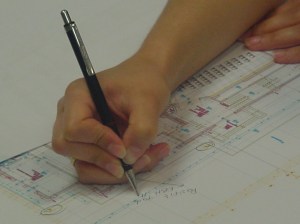
Schein defines culture as “… a pattern of shared basic assumptions that was learned by a group as it solved its problems of external adaptation and internal integration, that has worked well enough to be considered valid and, therefore, to be taught to new members as the correct way to perceive, think, and feel in relation to those problems.”

Implicit in this definition is that a group of people, in this case engineering practitioners and educators, are likely to persist in ways of conduct, and in hoengineer-1440190lding certain norms and values despite the application of external pressures to change. At UCL, as part of a faculty-wide, multi-disciplinary curriculum redesign of our undergraduate engineering programmes, we are currently introducing a revised engineering mathematics curriculum that places an emphasis on mathematical modelling and analysis. Our primary motivation for this curriculum change is that engineering students need to master the fundamental mathematical concepts that underpin engineering education and practice, as well as to gain the ability to apply these concepts to solving engineering problems.

Our motivation for the redesign of the mathematics curriculum is not unique to ourselves alone, as several other institutions are undertaking the same changes as well. Not only that, it appears that even a hundred years ago, progressive engineering educators and practitioners shared broadly the same concerns. In 1908, the American Association for the Advancement of Science published a paper entitled “The Teaching of Mathematics to Students of Engineering” that raised most of the concerns that we are grappling with today. It may be that the writers of this paper were far ahead of their time, which is unlikely. What is more likely, however, is that the culture of mathematics teaching within engineering is quite resilient, despite clamours for change. Below, I point out some of the issues raised in this paper.

1.      The importance of mathematics to the practice of engineering

Even a century ago, mathematics was seen as being very important to the practice of engineering. This view is neatly summed up by the statement:  “Mathematics is to an engineer what anatomy is to a surgeon, what chemistry is to an apothecary, what the drill is to an army officer. It is indispensable.”

2.      Criticism of existing teaching approaches

Even then, engineering mathematics was mainly taught without reference to engineering practice. Just as today, progressive academics and practitioners felt that such an approach led to students who only knew “… how to juggle with quantities in order to produce certain results.” This meant that engineering professors in other subjects had to teach again the material covered in pure mathematics classes.

3.      The objectives of teaching mathematics to students of engineering

Then, as now, it was widely accepted that mathematics is a tool for the study and practice of engineering. It was felt that teaching should “be such that the student knows the why and wherefore of each operation-in other words, that he learns to think mathematically.”

4.      Recommended approaches to teaching mathematics

The main method of teaching then, as now, was the monologue lecture method. Then, as now, this method was seen as inappropriate. It was felt that active learning methods were far much better at teaching mathematics as opposed to  “having another man’s mind do the reasoning for him”, as implied by the lecture method. In addition, students had to put time to work: “Midnight oil and the damp towel are for most students necessary accessories to the courses in pure mathematics.” This is consistent with today’s insistence on self-directed independent learning on the part of the students.

Secondly, it was felt that teachers needed to supplement analytical solutions with graphical demonstrations. This is consistent with an insistence on modelling and simulation in today’s engineering education practice.

5.      Who should teach mathematics

As a general rule, it was felt that engineering students were of average mathematical abilities. It was therefore felt that rather than relying on inexperienced instructors as was the norm, competent teachers should be used in the teaching of mathematics to engineering students.

Whilst some felt that teaching should be undertaken by engineers, this was not considered to be a necessary condition. Rather, effective teaching could be carried out by any competent teacher, so long as he was familiar with the potential applications to which the students would put mathematics to use in their later studies and careers.

6.      Achieving a balance between content and depth

As is the case today, teachers had to achieve an appropriate balance between the amount of content to teach and the depth to which teaching had to be undertaken. Mastery of fundamental mathematical concepts and principles was more preferable to teaching a wider range of topics at the expense of depth. It was felt that if students concentrated on a few key topics, then they would have sufficient depth to be able to take on any novel topics in the future.

7.      Pre-engineering school knowledge of mathematics

Then, as now, both academics and practitioners felt that the level and quality of mathematics teaching in high schools was inadequate. This had implications on what could be taught in engineering school as any efforts to implement remedial teaching of mathematics would have knock-on effects on other subjects making up the engineering curriculum.

Concluding Remarks

This discussions clearly indicates that concerns with the teaching of mathematics within engineering have remained largely unchanged over the past century. In addition, the solutions proposed for curriculum reform have been remarkably consistent, despite the passage of time. This is not to say that people have not tried before. Rather, it may be that curriculum reform has failed to take root primarily because of failure to take into account the cultural and other intangible aspects surrounding engineering education and practice.